Learn trading The year 2026 represents an exceptional opportunity to develop strong financial skills. beginner trading training This free resource guides you step by step, from the fundamentals to advanced strategies. Whether you're looking to learn trading from A to Z Or learn trading for free, You will find here the best online trading training to succeed in the financial markets with the best trading brokers in France.

1. Why learn trading in 2026?
Trading is a highly precise discipline that attracts millions of people every year. By 2026, this means understanding how the algorithms and the Smart Money move prices in the markets.
Financial markets offer unique opportunities for this Free complete trading course :
- Geographical freedom Trade from anywhere with an internet connection.
- Flexible hours The markets are open 24 hours a day on the Forex market.
- Revenue potential No earnings cap.
- Financial independence : Develop a skill that belongs to you.
Important warning
Trading involves significant risks. 70 to 90% retail traders lose money according to the AMF. Never trade with money you cannot afford to lose.
2. Learning to trade: The essential basics
Before placing your first trade, you need to master the vocabulary and fundamental concepts.
Essential trading vocabulary
Scroll through the table
| Term | Definition |
|---|---|
| Pip | Smallest unit of change in a currency pair (0.0001) |
| Batch | Unit of measurement for the size of a position - use our batch calculator |
| Spread | Difference between the purchase price (Ask) and the selling price (Bid) |
| Leverage | Multiplier allowing control of a larger position |
| Stop Loss | Automatic order to limit your losses |
| Take Profit | Automatic order to secure your winnings |
The different markets for learning trading
- Forex (Currencies) : EUR/USD, GBP/USD, USD/JPY. The world's largest market according to the BRI. Find the best broker for Forex trading.
- Clues : CAC40, DAX, S&P500, NASDAQ.
- Raw materials Gold (XAUUSD), Oil, Silver. Discover the best XAUUSD broker For trader the Gold.
- Cryptocurrencies Bitcoin, Ethereum on Binance.
3. Learning to trade: Choosing your style
Each trader must find the style that suits their personality and schedule.
Scalping and Day Trading
Scalping : Ultra-fast trades lasting from a few seconds to minutes.
Day Trading : Positions closed on the same day.
Swing and Position Trading
Swing Trading Positions over several days to weeks.
Trading Position Macro view over several months.
Scroll through the table
| Style | Duration | Timeframe | Time required |
|---|---|---|---|
| Scalping | Seconds to minutes | M1, M5 | Full time |
| Day Trading | Minutes to hours | M15, H1 | 4-8 hours/day |
| Swing | Days to weeks | H4, D1 | 1-2 hours/day |
| Position | Weeks to months | D1, W1 | 30 min/day |
4. Learning to trade: Fundamental analysis
Fundamental analysis involves studying the economic factors that influence prices.
- Inflation (CPI) Consumer Price Index.
- Job (NFP) Non-Farm US Payrolls - see Forex Factory.
- Interest rates Central bank decisions.
- GDP : Economic health of a country.
5. Learning to trade: Technical analysis
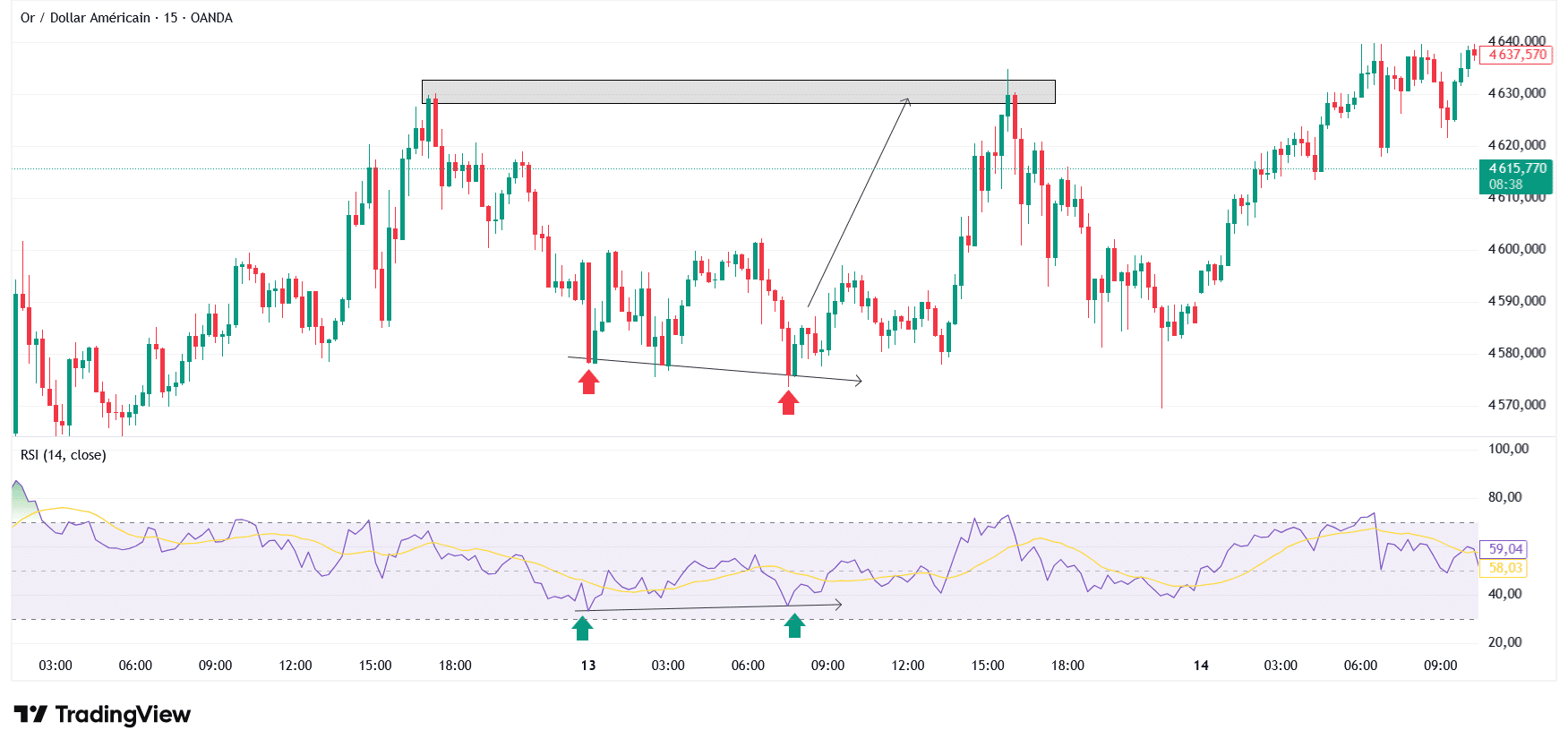
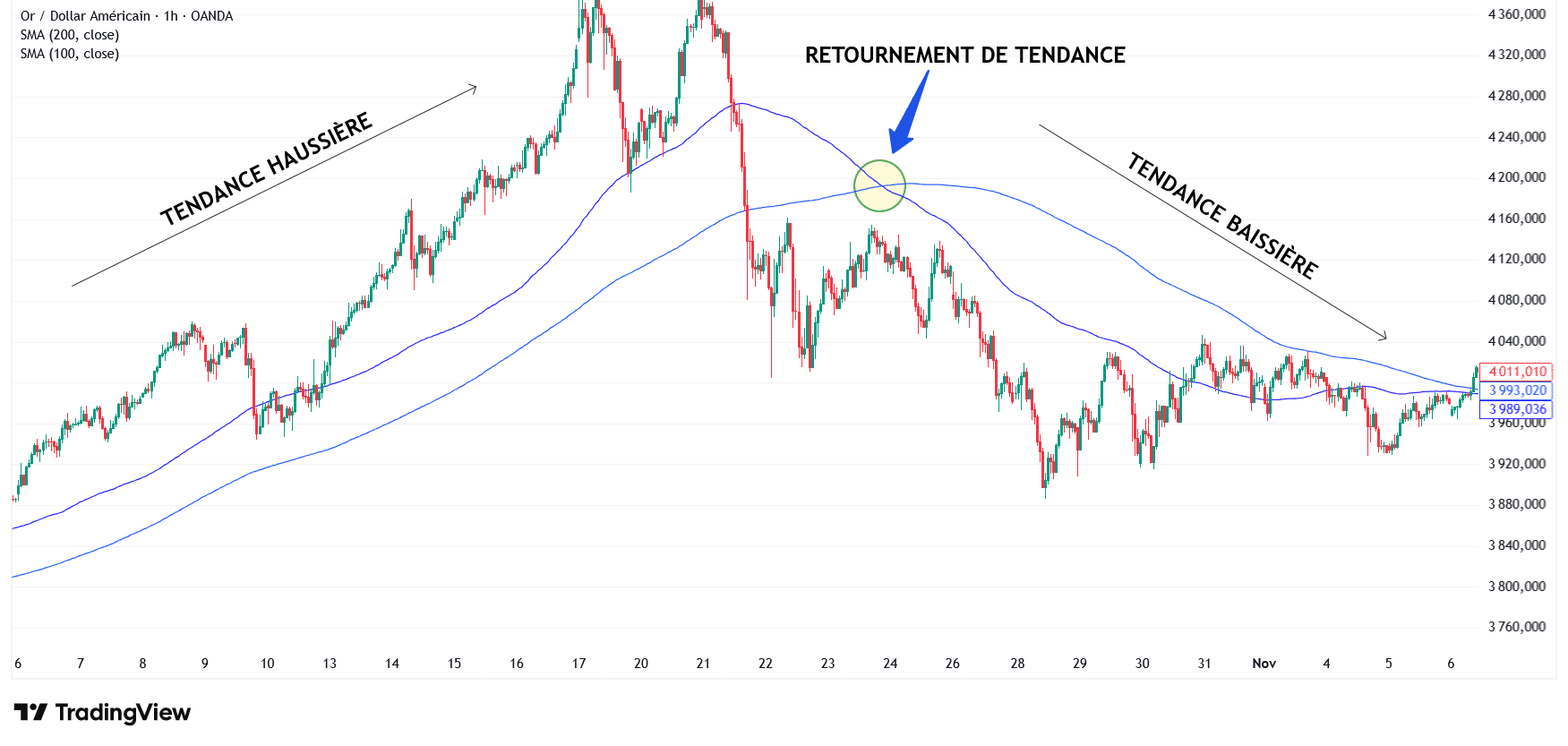
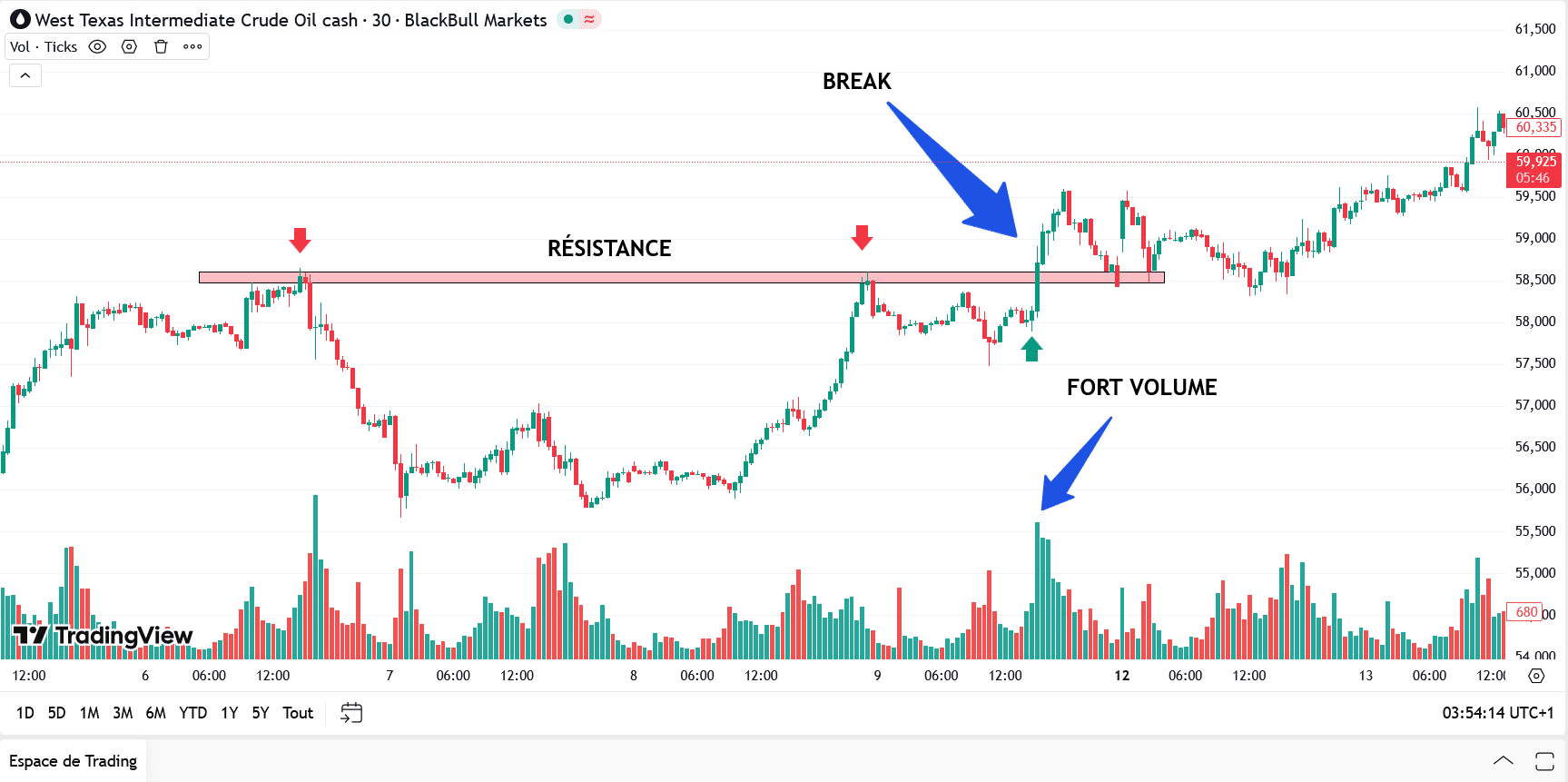
Technical analysis relies on studying charts to anticipate future price movements. Use indicators such as the RSI or the moving averages.
- Supports and Resistances Key levels where the price reacts.
- Japanese Chandeliers Hammers, Dojis, Enveloping.
- Chartist Figures Triangles, Summer, Double Top.
- Trendlines Trend lines.
The golden rule of trading
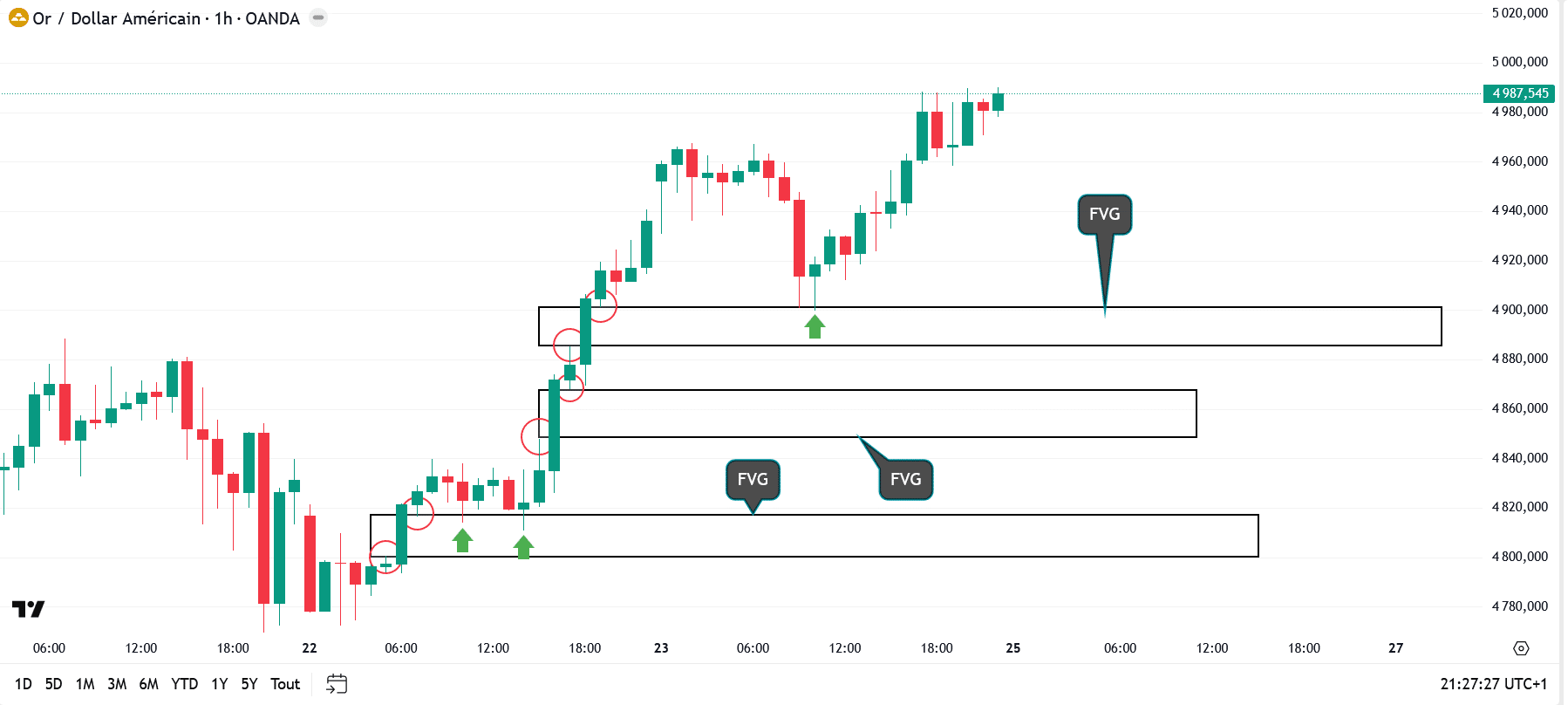
Price is king. Indicators are tools of confirmation, No decision yet. Also analyze the trading volume and the Fair Value Gap (FVG).
6. Technical indicators for learning trading
Indicators help confirm your analyses. Here are the essential :
LEARNING TECHNICAL ANALYSIS
7. Professional tools for learning trading
Use the right tools to succeed. Here's the best trading platform for beginners :
- TradingView : THE reference for graphical analysis.
- MetaTrader 4 : Trading platform for beginners historical for Forex.
- MetaTrader 5 : Enhanced version with more features.
8. Money Management: Key to learning trading
Money management is what separates profitable traders from losers.
Golden rule : Don't risk NEVER more than 1% of your capital by trade.
The Risk/Reward Ratio (RR)
With a 1:3 ratio, you remain profitable even with 30% of winning trades Calculate it with our risk/reward calculator.
9. The psychology of the trader: Learning to control oneself
Psychology represents 80% of Success. Without emotional control, you will lose.
Destructive emotions in trading
- Fear : Prevents you from making valid trades.
- Greed : It pushes you to overtrade.
- Revenge : Wanting to "make up for" a loss.
- FOMO : To enter a movement late.
Good habits for learning to trade
- Written trading plan
- Trading Journal
- Daily routine
- Breaks after the losses
10. Mistakes to avoid when learning trading
Scroll through the table
| Error | Solution |
|---|---|
| No stop loss | ALWAYS place a SL |
| Lever | Max 1% risk - use the calculator |
| Overtrading | Max 2-3 trades/day |
| No plan | Written plan required |
| Change strategy | minimum 6 months |
Best Trading Broker in France for Beginners
Trade with regulated brokers (FCA, CySEC, AMF). Best broker for trading gold and Forex.
Compare the Best Brokers11. FAQ – Learning to Trade
How much capital do I need to start trading?
Minimum 500€ for Forex. Start with a 3-month demo account with the best trading broker in France.
How long does it take to learn trading?
Between 12 and 24 months serious practice with a good beginner trading training. Discover the best trading training in France.
What timeframe is best for learning trading?
H4 or Daily (less noise, more time to decide).
Final Verdict – Learning to Trade in 2026
Trading is a marathon, not a sprint. This best free trading training It gives you the foundation for a profitable career. learn trading from A to Z, Follow this plan:
Action plan:
- Free demo account at the best trading broker in France
- Study this Free complete trading course
- Practice for 3-6 months in demo mode
- Trading Journal
- Going public with a small amount of capital
Happy trading!

Trader's Guide